Sunday, the day after Coquette, because apparently we were not going to cook that whole weekend. My husband had booked somewhere without telling me what it was, which is his favorite trick, and we ended up at a dark-wood bar with candles and the kind of chairs that squeak when you slide them in.
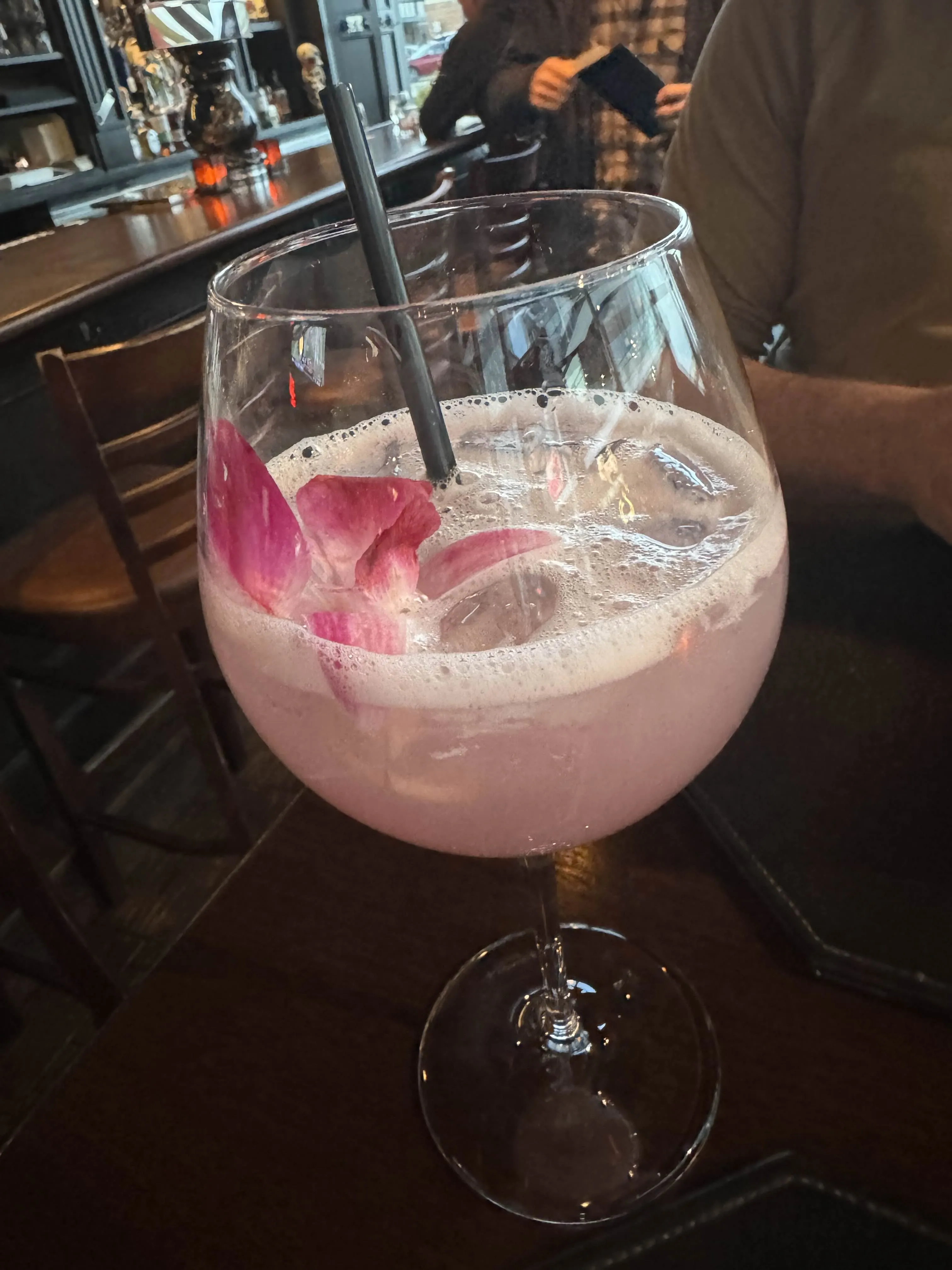
The first drink came in a glass the size of a small fishbowl, pale pink, floating with rose petals. I’d like to say I ordered it for the aesthetics but I ordered it because I saw someone else get one, and that’s a perfectly good reason to order a thing.
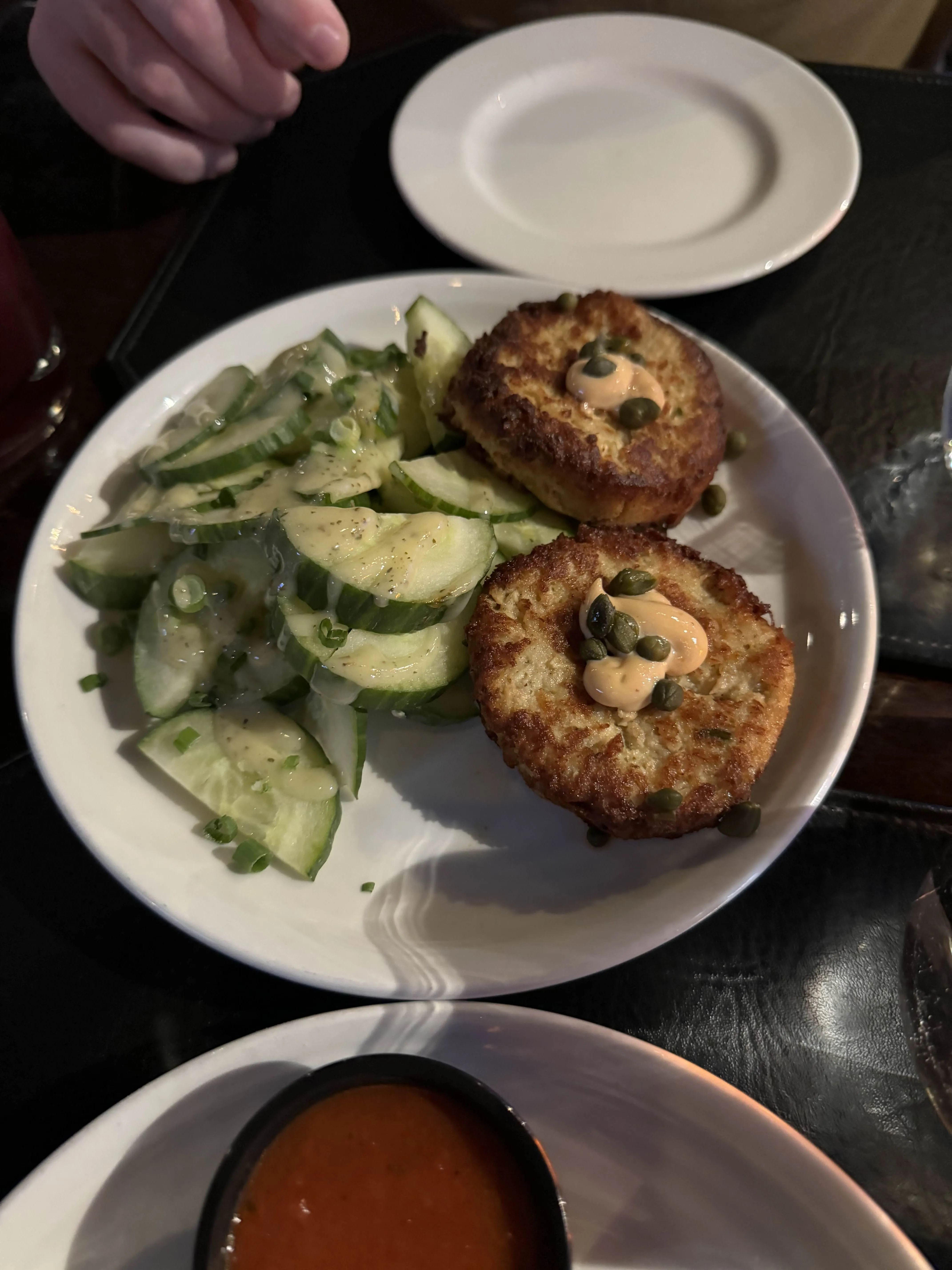
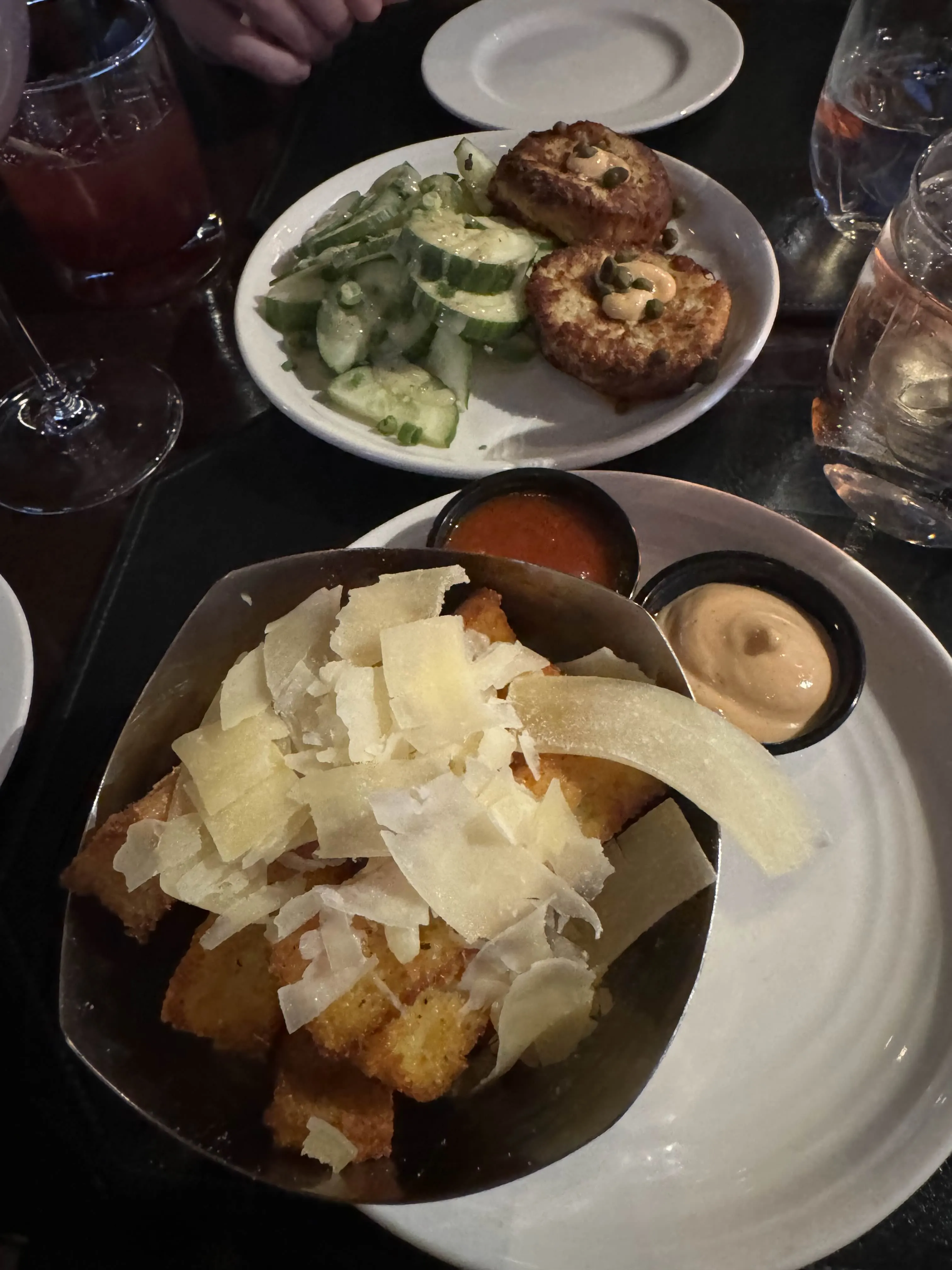
We shared two small plates. Crab cakes, golden, with capers and a swipe of something peach-colored on top, laid out beside cucumbers cut on a bias and dressed light. Then a bowl of fried potato wedges under a literal blizzard of shaved parmesan, with a spicy red dipping sauce I dipped into about four times more than I needed to.
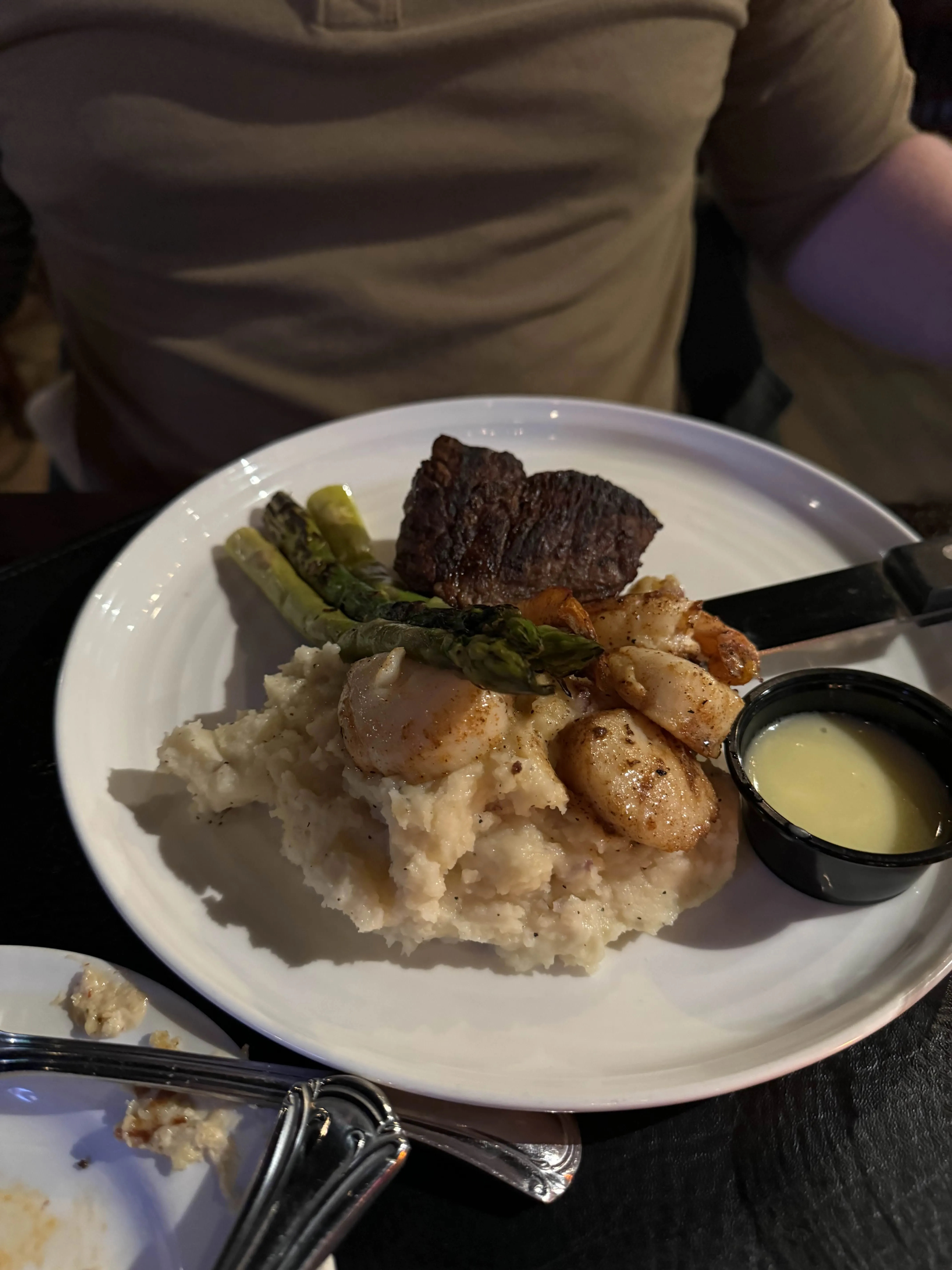
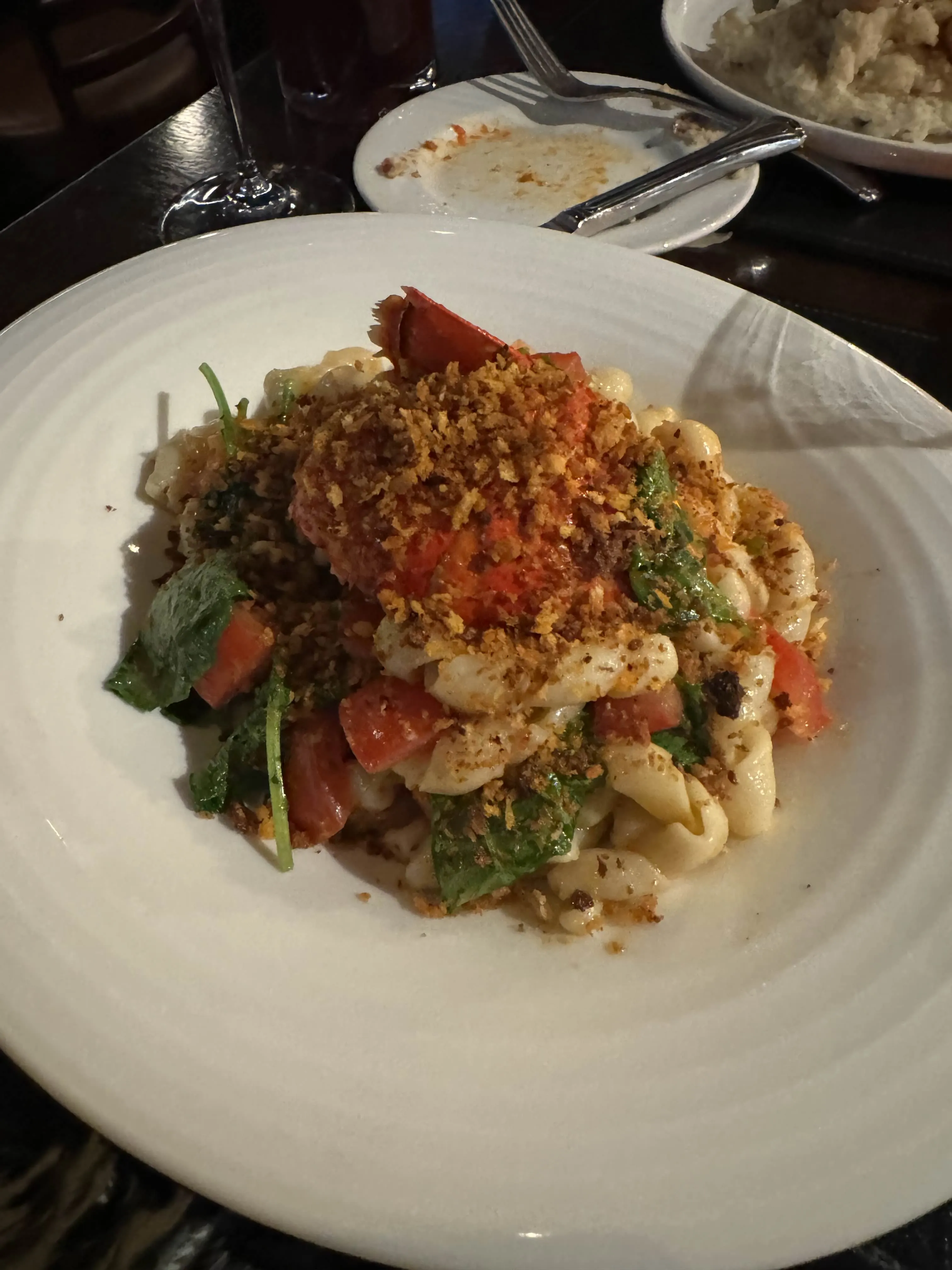
My husband ordered lobster pasta and nearly made a face when it came. It was breadcrumbed on top like a gratin, with fat chunks of lobster buried in cavatappi and spinach. He shared a bite and I took two. He noticed. I got a plate of scallops with a small steak and a couple of asparagus spears - perfectly cooked, which is rare enough that I should note it - arranged over a bed of mashed potatoes that I’d have happily eaten alone.
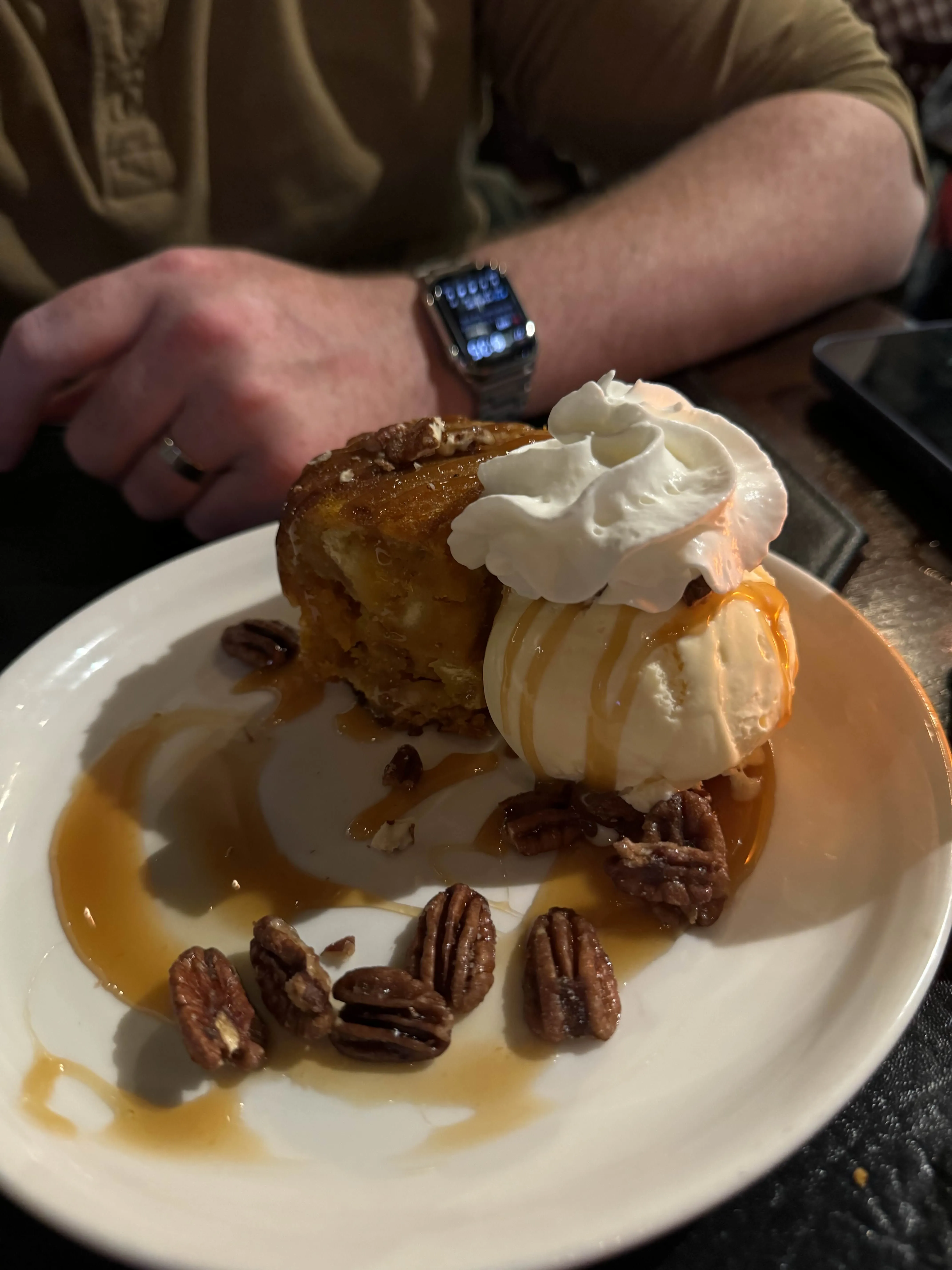
Dessert was a warm round of bread pudding with ice cream and candied pecans and enough caramel sauce to worry a dentist. We shared it, slowly, because that’s what you do when you’re drawing a dinner out.
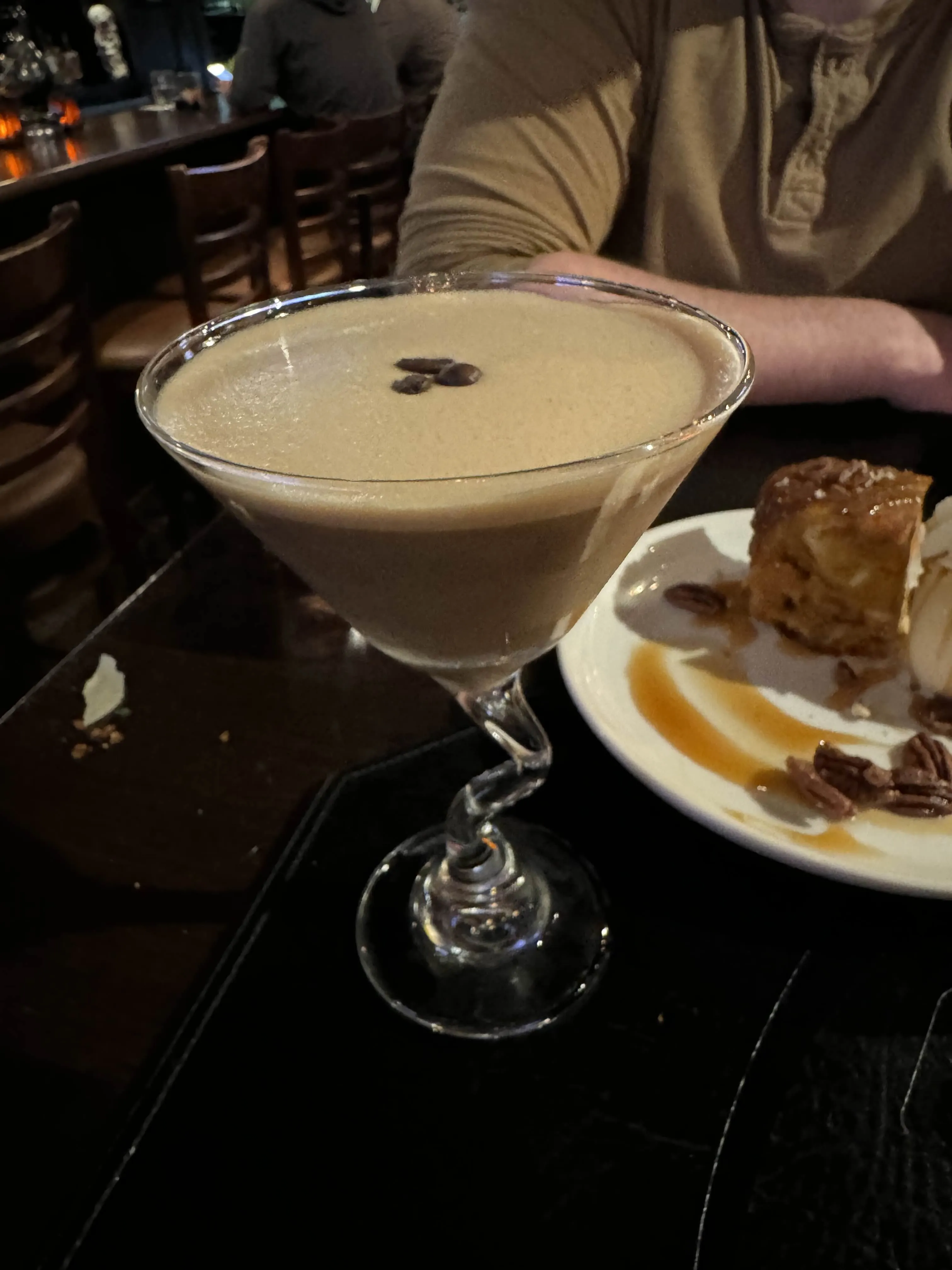
And then - because you cannot end a dinner like that without an espresso martini - an espresso martini. Three beans, a good foam. My husband says they’re a young-person drink and then orders one anyway.
We walked home under streetlights that made every puddle look like lacquer. I don’t remember what we talked about. I just remember the sense of having been fed really thoroughly, by someone who’d thought about every plate.